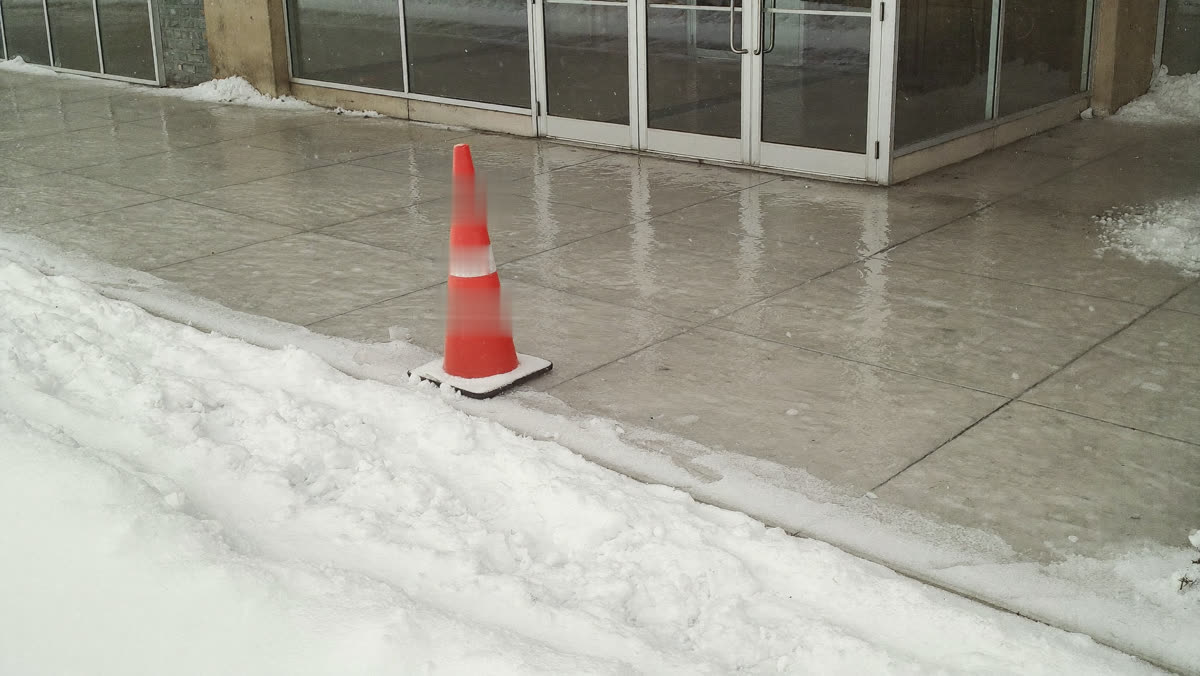
In Edmonton, snow and ice are more than a seasonal nuisance — they are one of the biggest sources of avoidable liability a commercial property faces. A single untreated patch of ice near an entrance can turn into a slip-and-fall claim, a WCB incident, or a blocked emergency exit. The good news: most winter hazards give off warning signs long before someone gets hurt. Here is how to spot them early.
Why reactive snow removal costs more than it saves
Waiting until snow has already piled up — or until a tenant complains — puts your property in a constant state of catch-up. Refreeze sets in overnight, crews arrive after the morning rush, and the window to prevent an incident has already closed. Reactive clearing also tends to be inconsistent from storm to storm, which is exactly the pattern that insurers and courts look at when a claim is filed.
Proactive management flips that equation. When clearing and de-icing happen on a defined schedule tied to weather triggers, hazards are addressed before foot traffic arrives, and you build a documented record that shows the property was maintained responsibly.
Warning signs your property is at risk
Walk your site during and just after a storm and look for these red flags:
- Refreeze zones. Areas where melt water runs across walkways during the day and freezes into black ice overnight — common near downspouts, roof drip lines, and sloped entrances.
- Poor drainage. Low spots where water pools instead of draining. These become skating rinks after a freeze-thaw cycle.
- Shaded, north-facing areas. Spots that never get direct sun stay icy days after the rest of the lot is clear.
- Worn or cracked pavement. Uneven surfaces trap ice and hide trip hazards under a thin layer of snow.
- Piled snow in the wrong places. Snow banks that block sightlines, cover accessible parking, or melt back across cleared paths.
- No clear record of who cleared what, and when. If you cannot show when a surface was last treated, you cannot defend the property if an incident occurs.
Proactive steps that reduce liability
1. Start with a site assessment
Map the property's high-risk areas — entrances, accessible routes, stairwells, loading zones, and pedestrian crossings — and rank them by priority. Not every square metre needs the same response time, but your safety routes always come first.
2. Define your trigger depths and response times
Decide in advance at what snow accumulation crews deploy, and how quickly priority zones must be cleared. A written trigger (for example, clearing begins at a set accumulation or ahead of business hours) removes guesswork during a storm.
3. Build a de-icing plan, not just a plowing plan
Clearing snow is only half the job. Ice control — sanding and de-icing at the right times — is what actually prevents most slip-and-fall incidents. Pay special attention to the refreeze zones you identified earlier.
4. Document everything
Keep a log of each service visit: date, time, areas treated, and conditions. This record protects your business if a claim is ever filed and helps you spot recurring problem areas across the season.
5. Consolidate under one accountable vendor
Juggling separate contractors for snow, landscaping, and general maintenance creates gaps — and gaps are where incidents happen. A single accountable partner means one point of contact, consistent standards, and no finger-pointing when weather turns fast.
When to bring in a professional
If your team is stretched thin, if your property has multiple entrances and a large parking area, or if you have already had a near-miss this season, it is time to move from reactive clearing to a managed program. Professional crews bring route-based scheduling, proper ice-control materials, insurance, and the documentation that keeps your property defensible.
Need dependable snow & ice management this winter?
E&S handles commercial snow clearing, de-icing, sanding, and rapid storm response across Edmonton, Fort Saskatchewan, St. Albert, Sherwood Park, Leduc, and Red Deer.
Request a Facility Assessment